Over the past two decades, learning science has revealed important truths about how people learn: attention is limited, belonging is essential, and there is no such thing as an “average” learner. Yet despite this research, many classrooms are still organized in ways that don’t fully optimize how people learn. Teachers often struggle to translate broad findings into daily practice.
The DEEDS framework (Discover, Examine, Engineer, Do, Share) was created to bridge that gap. Rooted in research on cognition, motivation, identity, and individual variability, DEEDS turns the science of learning into a practical, repeatable process. It gives teachers a roadmap for designing meaningful instruction and provides students with the knowledge, skills, and dispositions they need to thrive.
The Designing for Learning Primer synthesizes decades of research in the Science of Learning and Development (SoLD) and highlights four key influences on learning:


The DEEDS framework (Discover, Examine, Engineer, Do, Share) brings these principles to life by giving teachers and students a clear process anchored in student-driven learning. Each DEEDS unit revolves around a compelling challenge that matters to students and their communities while demanding the use of academic content and skills.
For example, students might:
To address these challenges, students follow structured protocols organized into five phases:
DEEDS was intentionally designed to align with the four pillars of SoLD:
Individual Variability: To accommodate individual variability, the DEEDS framework provides structured support and multiple pathways for engagement. Scaffolded protocols guide progression and reduce barriers for all learners. Simultaneously, students are offered multiple entry points for content engagement (e.g., hands-on work, analysis, community connection) and varied demonstrations of learning (products and performances) that reflect their strengths and readiness.
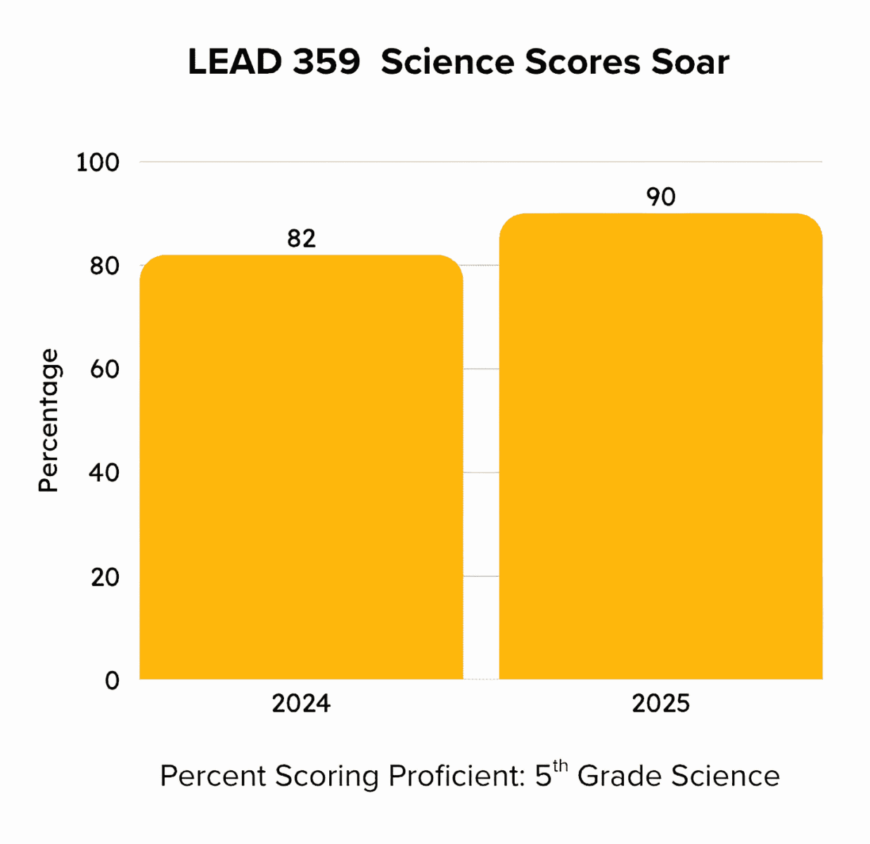
The DEEDS framework effectively merges rigorous academics with high-impact, real-world action, demonstrating that educators don’t have to choose between the two. The clear, research-based structure benefits teachers by creating coherence and reducing planning overwhelm, thus freeing them to guide inquiry and deepen content. For students, DEEDS offers a transferable process for tackling challenges, fostering metacognitive habits (how to learn) alongside sustained motivation from authentic tasks that build identity and belonging within their community. This dual focus on structure and authentic application yields exceptional results in science where DEEDS is mostly used. Last year, our South Bronx demonstration site achieved 82% proficiency in science, and this year reached 90%.
DEEDS translates the science of learning into practical classroom use. It provides teachers with a defined structure that makes real-world learning readily implementable and offers students a flexible, transferable process for tackling authentic challenges. This actionable framework supports the entire learning process and gives you a way to bring the science of learning and development to life!Want to learn more? Set up a call with us!